Rapid Turnaround Inspection
15-20 min per vehicle section
Inspect launch vehicles between flights at the pace reusable rocketry demands. Do not let inspection slow your cadence.
Solutions · Space & Launch · The Final Word in Space
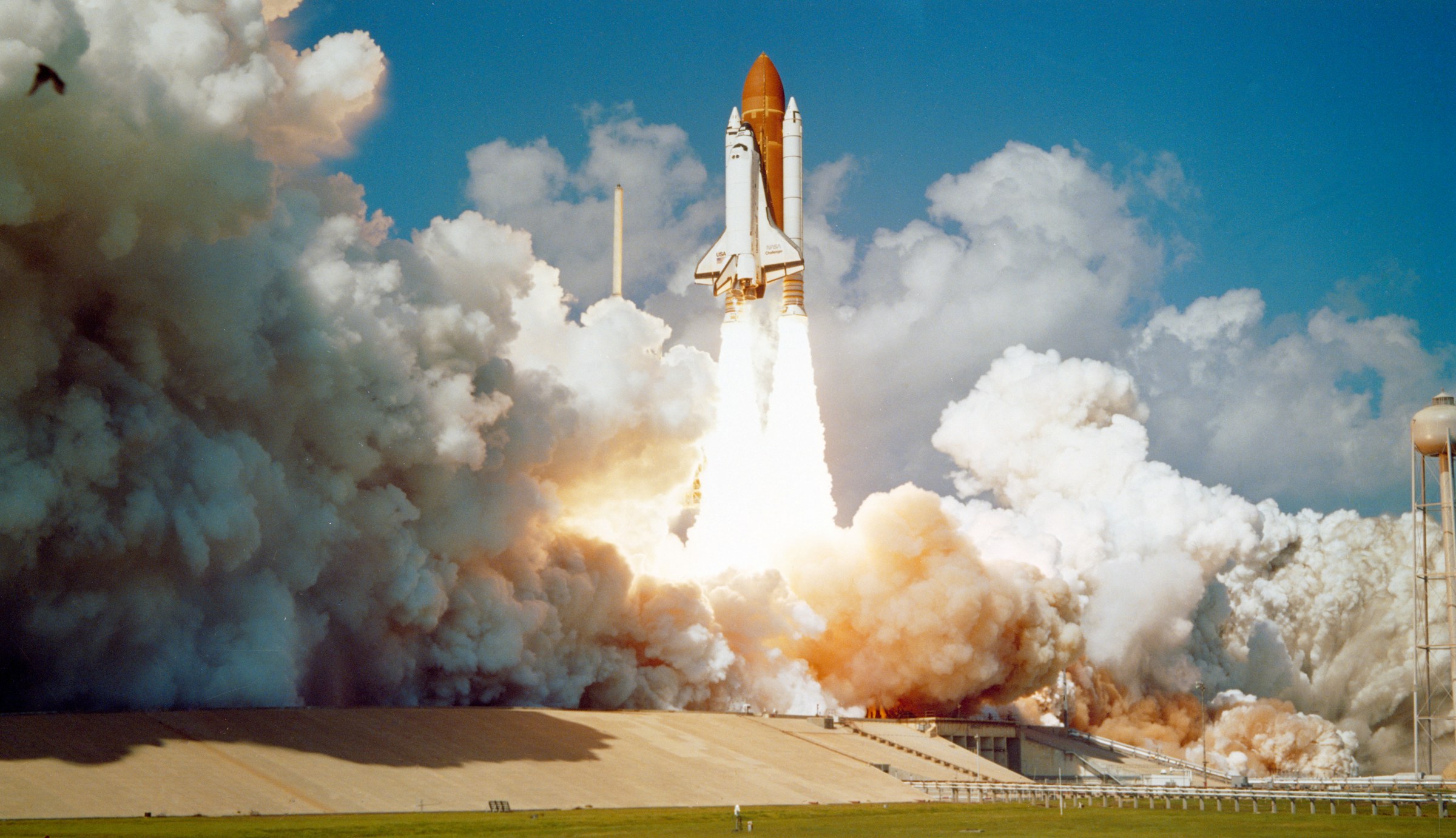
Artemis II scrubbed on the pad. NASA's flagship program 4+ years behind schedule, $98 billion in program cost overruns — attributed in part to inspection-detection gaps. The economics of New Space mandate new technology to ensure reliability and scalability. Losing faith means losing your business.
The problem
Commercial launch cadence is climbing fast — global orbital launches have grown from 61 to over 210 per year and reusable-vehicle programs require rapid post-flight inspection and turnaround between every flight. Composite and exotic-material structures demand multi-modal NDT that visual inspection cannot provide.
Single-vehicle inspection failures cascade fast. Boeing 737 MAX (2019): a $30 fastener defect resulted in $35 billion in losses and complete fleet grounding. UPS MD-11: an unapproved maintenance procedure bypassing inspection led to 10% capacity loss · $13B impact. NASA Artemis: launch delays of 4+ years partially attributed to inspection-detection gaps, $98B in program cost overruns.
The $1.8T New Space economy cannot run on the old inspection model.
Launch pad infrastructure endures extreme thermal and acoustic stress cycles, and thermal protection systems require time-consuming, subjective manual assessment.
The inspection process designed for a dozen launches per year cannot support a dozen launches per month.
The solution
Arachnid holds an active engagement partnership with NASA Kennedy Space Center for launch infrastructure inspection — tied to the Artemis program. Vandenberg support-infrastructure contract work is targeted next.
Hyperspectral imaging detects composite and thermal-protection-system degradation invisible to cameras. LiDAR maps structural deformation from launch and re-entry loads at sub-millimetre precision. LWIR thermal identifies heat damage patterns. Laser profilometry quantifies micro-erosion on ablative surfaces. All processing runs on-device — delivering results at the pad, not hours later from a remote lab.
One platform, six fused modalities, FAA-aligned records. The pad-side data your launch program needs in minutes, not days.
Key benefits
Where launch cadence pushes hardware to its limits, inspection must keep up — at the pad, in real time.
15-20 min per vehicle section
Inspect launch vehicles between flights at the pace reusable rocketry demands. Do not let inspection slow your cadence.
200+ hyperspectral bands · 400-2,500 nm
Detect delamination, heat shield degradation, and material property changes in composites and thermal protection systems that visual and single-sensor methods cannot identify.
300K pts/sec LiDAR · 0.5 mm precision
Map launch-induced deformation, re-entry stress damage, and dimensional changes across vehicle structures and pad infrastructure.
NVIDIA Jetson AGX Orin · 275 TOPS
Real-time AI analysis at the launch site. No data transfer delays. No cloud dependency. Results in minutes, not hours.
Use cases
Four mission profiles, one autonomous platform. Same sensor head adapts to each.
Post-flight and pre-flight inspection of booster stages, interstages, and payload fairings. LiDAR maps deformation. Hyperspectral detects material property changes. Thermal identifies heat damage patterns from ascent and re-entry.
Launch pads, flame trenches, water deluge systems, and tower structures endure extreme stress every launch. ATLAS scans pad infrastructure between launches to identify thermal fatigue, corrosion, and structural damage before they threaten operations.
Transporters, erectors, umbilicals, and propellant systems — critical GSE requires regular inspection. ATLAS delivers consistent multi-spectral assessment across all ground support assets.
Thermal protection tiles and ablative heat shields require detailed inspection between flights. Hyperspectral imaging detects degradation in material properties. Thermal LWIR maps heat penetration patterns. LiDAR measures surface erosion at 0.5mm precision.
Active engagements
Six engagements underway with space primes — kicked off March 2026. Anchored by an active NASA Kennedy Space Center Artemis-tied partnership. The only SaaS that can enable the $1.8T space industry with three structural moats competitors cannot simply buy.
USA-designed, USA-built, AES-256, MIL-STD-461 EMC. Operates −40 °F to 130 °F with <2 hr rapid deployment. The regulatory triple that takes years and structured engagement — not a check.
Hyperspectral · LWIR · LiDAR · laser profilometry · radar NDT · polarimetric RGB — fused on-device. Competitors run 1–2 modalities. 24–36 months ahead of nearest viable.
AI models trained on 16M+ flight hours of commercial aviation data. Every scan feeds the network — each new airframe compounds the moat. Data is profit.
When we succeed
98%
of unscheduled maintenance prevented across our deployed fleet of customers.
Industry impact
$44.7B
in lost revenue and unplanned repair spend avoided annually at full deployment.
Next step
Active NASA Kennedy Space Center engagement, Artemis-tied. Six fused sensor modalities purpose-built for composites, thermal-protection systems, and pad infrastructure. Six more engagements in motion with space primes. Let us show you what ATLAS can do for your launch program.
 arachnid systems